
Arkansas Tech University has earned a $2 million grant to make science, technology, engineering and mathematics (STEM) degrees more accessible to low-income students.
The National Science Foundation (NSF) grant will fund a project entitled Social Mobility through Arkansas Tech (SMART), which will provide scholarships and additional resources to eligible students through the NSF Scholarships in Science, Technology, Engineering and Mathematics (S-STEM) program.
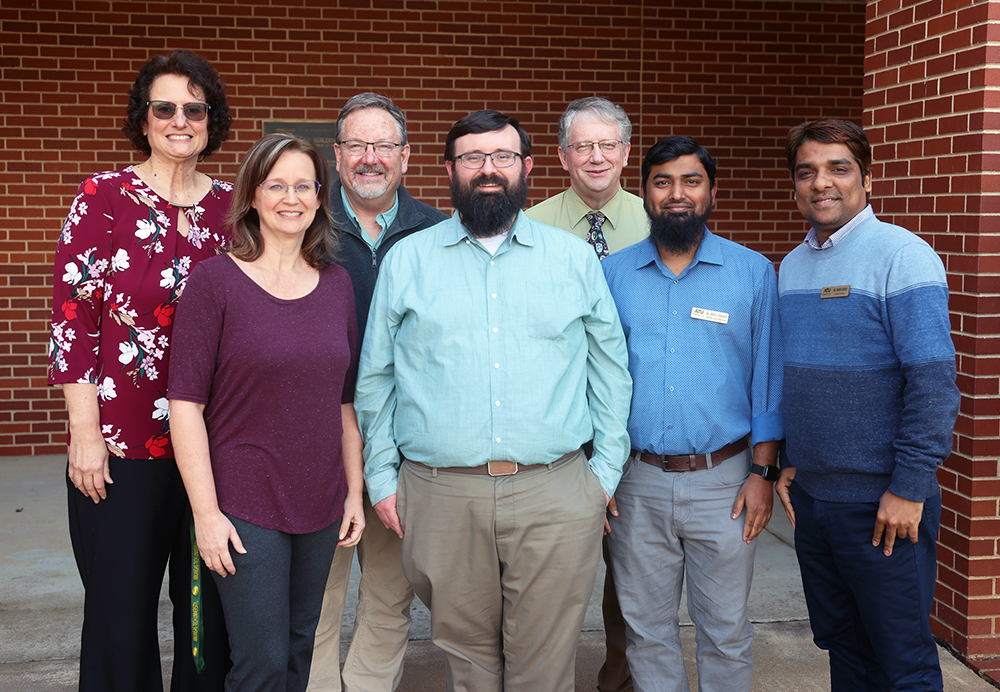
Dr. Matthew Hankins, ATU assistant professor of physics, is principal investigator on the SMART grant. Three additional ATU faculty members — Dr. John Krohn, associate dean of the ATU College of STEM and professor of mechanical engineering; Dr. Jeanine Myers, professor of mathematics; and Dr. Robin Ghosh, assistant professor of computer and information science — are co-principal investigators.
Additional members of the project team are Dr. Jessica Young, ATU professor of physics; Dr. Hamed Shojaei, head of the ATU Department of Mathematical and Physical Sciences and professor of physics; Dr. Abdus Siddique, ATU assistant professor of computer and information science; and Rebecca Cunningham, assistant professor of computer and information science.
“The Social Mobility through Arkansas Tech (SMART) program is a multidisciplinary initiative designed to support academically talented, low-income students across a range of STEM fields, including computer science, cybersecurity, mathematics, physics, engineering physics, computer engineering, electrical engineering and mechanical engineering at Arkansas Tech University,” said Hankins. “The project will provide students with a combination of scholarships, mentoring, cohort-based learning, career exploration and research opportunities, all aimed at boosting engagement, retention and graduation rates. In total, the project expects to serve at least 40 students across these programs, with the broader goal of helping low-income students overcome the many barriers that can stand in the way of academic success.”
Through their participation in the project, ATU faculty members will assess the academic success of SMART program participants in order to inform future STEM education initiatives.
“The SMART project aims to build an evidence base around several interconnected approaches — structured mentoring, cohort development and experiential learning — and how they shape STEM identity in high-achieving students who lack access to resources,” said Hankins. “A core component of the work involves assessing how academic and social support systems drive student success, with particular attention to questions like whether activities outside the classroom improve persistence and graduation rates, and how mentoring affects students’ sense of confidence and belonging as they develop their careers. Ultimately, by collecting and sharing data, the project hopes to advance broader knowledge about best practices in STEM education and workforce development.”
The SMART program will begin at Arkansas Tech on July 1, 2026, and continue through June 30, 2032.
Visit www.atu.edu/stem to learn more about the ATU College of STEM.